
A houseboat cruise through Alappuzha is one of the most memorable ways to experience Kerala’s famous backwaters. As your houseboat glides through narrow canals, coconut-lined shores, and traditional villages, you’ll witness a way of life that has remained closely connected to the water for generations.
But the backwaters offer more than scenic views and relaxing cruises. Along the waterways and near popular houseboat boarding points, you’ll find vibrant local markets where Kerala’s culture comes alive through spices, handicrafts, textiles, coir products, and handmade souvenirs.
Many travelers combine their houseboat journey with visits to Alappuzha’s local markets, allowing them to explore the region beyond the water. From buying freshly harvested spices and traditional Kerala handicrafts to discovering unique souvenirs that reflect the backwater lifestyle, shopping becomes a natural part of the Alappuzha experience.
This guide explores the best local markets in Alappuzha, what to buy, and how to include these shopping destinations in your houseboat itinerary for a more complete backwater experience.
Why Shopping in Alappuzha Feels Different
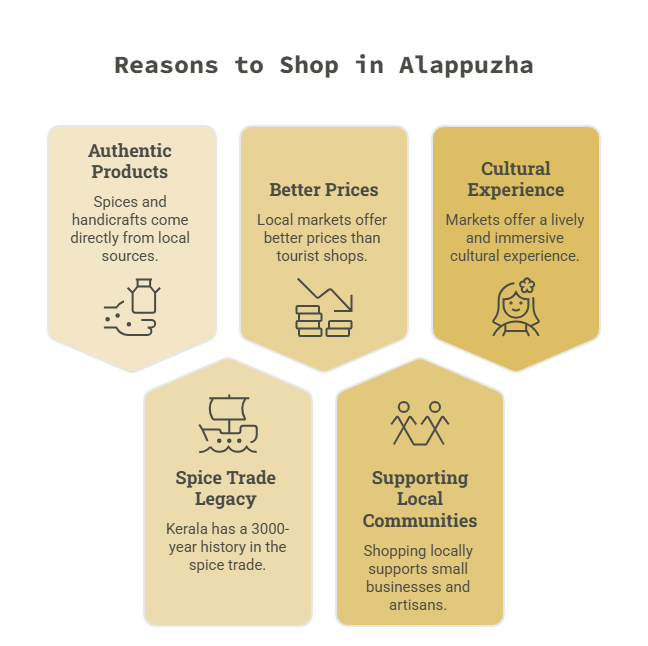
There are many shopping destinations across Kerala, but Alappuzha offers something uniquely authentic. The city’s markets are closely connected to the local communities, backwater economy, spice trade heritage, and artisan culture.
1. Authentic Products Direct from the Source
One of the biggest reasons travelers prefer shopping in Alappuzha local markets is authenticity. Many spices sold here come directly from Kerala plantations and nearby hill regions. Handicrafts are often made by local artisans rather than factory-produced in bulk.
When you buy spices in Alappuzha, you are often purchasing products that are fresher, more aromatic, and more flavorful than packaged supermarket alternatives.
2. Kerala’s 3000-Year Spice Trade Legacy
Kerala has been part of the global spice trade for over 3000 years. Ancient traders from Rome, Arabia, China, and Europe visited Kerala’s coast searching for black pepper, cinnamon, cardamom, cloves, and other valuable spices.
Walking through Alappuzha spice markets today still feels connected to that historical legacy. The fragrance of fresh pepper and cardamom drifting through the air creates an atmosphere that instantly transports travelers into Kerala’s cultural history.
3. Better Prices Than Tourist Shops
Compared to airport stores and commercial souvenir outlets, local markets in Alappuzha usually offer significantly better prices.
Travelers often find:
- Lower prices for premium spices
- Better bargaining opportunities
- Handmade products unavailable in malls
- Wholesale options for bulk buyers
- Direct artisan pricing
In many cases, tourists report saving 30–50% compared to souvenir shops in major tourist centers.
4. Supporting Local Communities
Shopping from local markets directly supports:
- Small family-run businesses
- Traditional artisans
- Coir workers
- Spice growers
- Local textile makers
- Women-led cooperatives
Your purchase becomes part of the local economy rather than corporate retail chains.
5. A Cultural Experience Beyond Shopping
Alappuzha markets are lively, colorful, and deeply immersive. Vendors happily explain products, demonstrate craftsmanship, and share stories about Kerala traditions.
The experience includes:
- Smelling freshly ground spices
- Watching coir weaving techniques
- Listening to local bargaining conversations
- Trying Kerala snacks from street vendors
- Photographing colorful market lanes
- Exploring markets near scenic canals and backwaters
That cultural connection is what makes shopping in Alappuzha memorable.
Top Local Markets in Alappuzha: Complete Guide
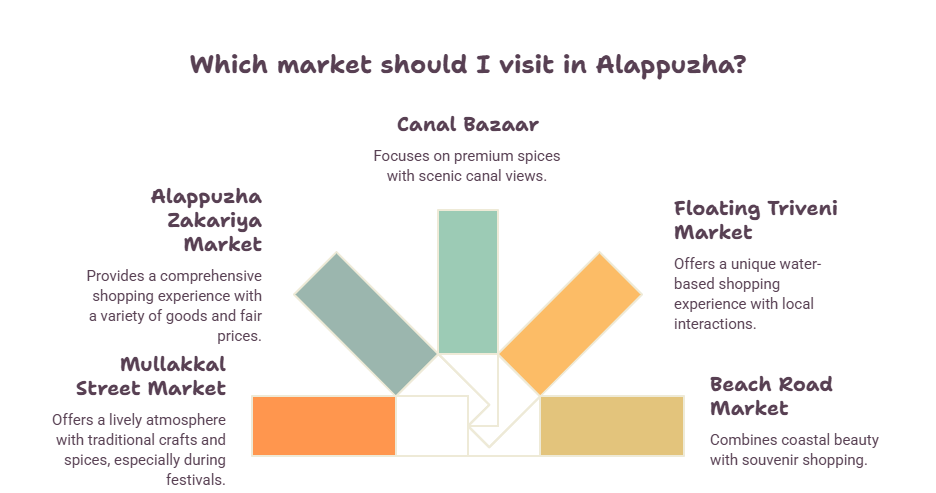
Mullakkal Street Market
Mullakkal Street Market is one of the oldest and busiest local markets in Alappuzha. Located in the heart of the town, this pedestrian-friendly shopping street perfectly captures the energetic atmosphere of Kerala’s traditional marketplaces.
The market becomes especially lively during evenings when locals, travelers, and street vendors fill the narrow lanes with activity. During the famous Mullakkal Chirappu Festival in December, the area transforms into a dazzling celebration with decorative lights, cultural events, food stalls, and festive shopping.
What to Buy at Mullakkal Street Market
- Fresh spices like cardamom, black pepper, cinnamon, turmeric, and cloves
- Traditional Kerala sarees and textiles
- Handmade wooden handicrafts
- Brass lamps and diyas
- Kathakali masks and cultural souvenirs
- Coconut shell decorative products
- Coir mats, bags, and eco-friendly products
- Wooden sculptures and carvings
What Makes the Experience Special
The market feels alive at every corner. The aroma of spices blends with the smell of local snacks like pazham pori and banana chips. Street-side vendors display colorful handicrafts while textile shops showcase traditional Kerala fabrics.
Travelers who enjoy photography will love capturing:
- Colorful spice displays
- Traditional market scenes
- Local street food stalls
- Festive evening lighting
- Busy shopping lanes
Alappuzha Zakariya Market
Zakariya Market is among the most famous shopping destinations in Alappuzha. This historic market functions as both a traditional local marketplace and a modern commercial hub.
Unlike smaller street markets, Zakariya Market is more organized, with dedicated sections for seafood, spices, groceries, textiles, handicrafts, and daily essentials.
The market remains heavily visited by locals, which is often the best sign of authenticity and fair pricing.
What to Buy at Zakariya Market
- Premium Kerala spices
- Fresh seafood and local produce
- Traditional Kerala sarees and dhotis
- Handmade souvenirs
- Local groceries and condiments
- Kerala snacks and pickles
- Artisanal handicrafts
- Traditional garments with Kerala craftsmanship
Why Travelers Like Zakariya Market
The market offers excellent variety under one roof. Visitors can explore spice stalls, buy textiles, shop for souvenirs, and experience local daily life all in the same place.
The seafood section is particularly famous among locals for freshness and fair pricing. Many vendors also offer cleaning services for seafood purchases.
Shopping Advantages
- Reasonable pricing
- Family-friendly environment
- Good quality assurance
- Organized layout
- Strong local atmosphere
- Combination of traditional and modern shopping
For travelers who want one comprehensive shopping stop, Zakariya Market is one of the best places in Alappuzha.
Canal Bazaar
Located along the scenic canal-side areas of Alappuzha, Canal Bazaar is especially popular for premium spice shopping.
The setting itself makes this market unique. With waterside views, boats passing nearby, and the fragrance of spices filling the air, shopping here feels deeply connected to the backwater atmosphere.
What to Buy at Canal Bazaar
- Black pepper
- Green cardamom
- Cloves
- Cinnamon
- Turmeric
- Homemade masalas
- Spiced tea blends
- Bulk spice packs
- Dry spice collections
Why Canal Bazaar Is Famous
Travelers often describe Canal Bazaar as the best place for spice shopping in Alappuzha because vendors focus heavily on freshness and quality.
Many shopkeepers explain:
- Harvest seasons
- Spice origins
- Storage methods
- Cooking recommendations
- Flavor differences between varieties
Floating Triveni Market
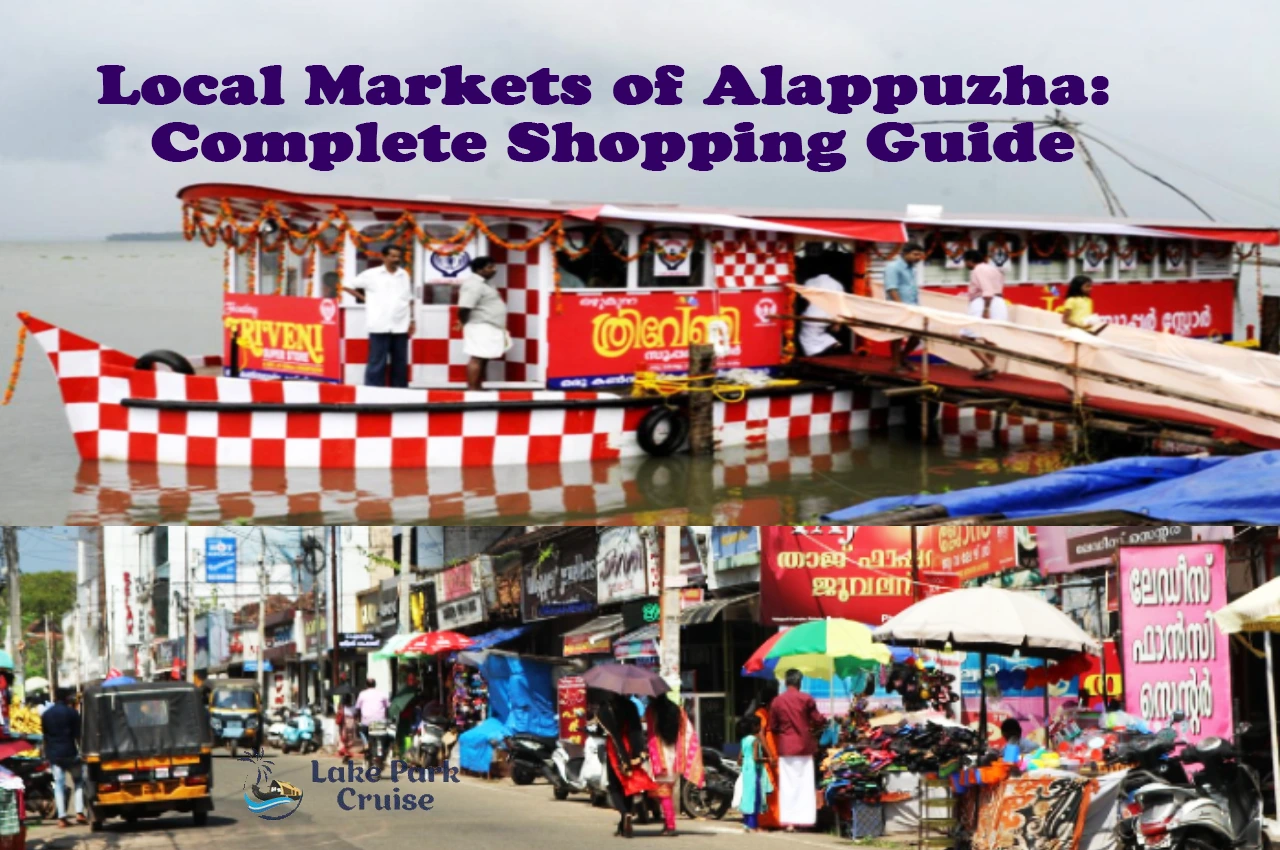
The Floating Triveni Market is one of the most unique shopping experiences in Kerala.
For houseboat travelers, the Floating Triveni Market offers one of the most authentic glimpses into daily life on Kerala’s waterways.
Unlike conventional markets, vendors operate directly from boats on the waters of Vembanad Lake. The floating market reflects the same water-based lifestyle that travelers experience during a houseboat cruise. Residents purchase vegetables, spices, household essentials, and handicrafts without leaving the water, showcasing how deeply the backwaters influence everyday life.
Visiting the floating market before or after a houseboat cruise provides a fascinating perspective on the traditional trading culture that has existed in Kerala’s waterways for generations.
Operating Hours
- Best timing: 6:00 AM to 11:00 AM
- Ideal visiting hours: 6:00–8:00 AM
What to Buy
- Fresh fruits and vegetables
- Dry goods and spices
- Coir products
- Household essentials
- Handmade handicrafts
- Daily-use products
- Traditional souvenirs
Why the Floating Market Is Special
Unlike tourist-designed attractions, the Floating Triveni Market is a real working marketplace used daily by local communities.
Visitors experience:
- Vendors selling directly from boats
- Water-based trading culture
- Authentic local interactions
- Vibrant morning energy
- Incredible photography opportunities
The atmosphere feels lively and exciting, especially early in the morning when vendors compete to attract buyers.
Beach Road Market
Beach Road Market combines coastal beauty with shopping culture.
Located near Alappuzha Beach, the market offers a relaxed atmosphere where travelers can shop for souvenirs while enjoying sea breeze and sunset views.
Popular Purchases
- Shell jewelry
- Handicrafts
- Kerala souvenirs
- Beach accessories
- Spices and snacks
- Coconut shell products
- Street food
What to Buy in Alappuzha: Complete Shopping Guide
Spices – Kerala’s Signature Treasure
Black Pepper, Cardamom, Cinnamon, Cloves, Turmeric
Black Pepper known as the “King of Spices,” Kerala black pepper is rich, aromatic, and intensely flavorful. Kerala cardamom is famous worldwide for its strong fragrance and premium quality. Authentic cinnamon offers sweet warmth and excellent flavor for cooking. Cloves provide concentrated aroma and are widely used in cooking and Ayurvedic remedies. Turmeric is valued for both culinary and medicinal purposes.
Typical Price Range
- Premium spices: INR 200–500 per 100g
- Cardamom: INR 300–400 per 100g
- Pepper: INR 200–350 per 100g
Travel-Friendly Packing
- Airtight packaging
- Vacuum sealing
- Travel-friendly packets
- Bulk export packing
Spices generally do not require special customs clearance for travelers.
Handicrafts – Authentic Kerala Souvenirs
Alappuzha handicrafts reflect Kerala’s artistic traditions, village culture, and natural resources.
Wooden Handicrafts
- Wooden houseboat models
- Snake boat miniatures
- Elephant figurines
- Temple art reproductions
Coconut Shell Products
Eco-friendly coconut shell crafts are widely popular among tourists.
- Coconut shell bags
- Jewelry
- Decorative items
- Wall hangings
- Handmade accessories
Coir Products
Alappuzha is famous for coir production.
- Handwoven mats
- Tote bags
- Eco-friendly accessories
Cultural Souvenirs
- Kathakali masks
- Temple artwork
- Aranmula Kannadi mirrors
- Stone sculptures
- Traditional paintings
Kerala Textiles
Traditional Kerala fabrics are another major attraction.
- Kasavu sarees
- Cotton handloom fabrics
- Mundu
- Embroidered shawls
- Kerala-style scarves
How to Ensure Authenticity While Shopping
Authentic Spice Buying Tips
- Buy from established shops
- Choose whole spices
- Smell products before purchasing
- Check freshness visually
- Ask questions about sourcing
Authentic Handicraft Buying Tips
- Look for handmade details
- Avoid overly perfect mass-produced items
- Ask about artisan background
- Prefer cooperative stores for premium purchases
Market Locations and Navigation Guide
Cluster 1 – Central Alappuzha
Walking-distance markets include:
- Mullakkal Street Market
- Zakariya Market
- Canal Bazaar
- Chandra Babu Shopping Complex
Travelers can comfortably cover these areas within 2–3 hours.
Cluster 2 – Waterfront Shopping Areas
Includes:
- Beach Road Market
- Nehru Trophy Finishing Point shops
- Boat jetty shopping areas
Auto-rickshaws are ideal for moving between these locations.
Cluster 3 – Backwater Shopping Integration
Includes:
- Floating Triveni Market
- Houseboat-connected shopping points
- Lakeside stalls
These are best combined with boat or houseboat experiences.
Final Thoughts: Why Alappuzha Markets Deserve a Place in Your Itinerary
The local markets of Alappuzha offer far more than shopping opportunities. They provide travelers with an authentic connection to Kerala’s culture, craftsmanship, spice heritage, and community life.
From the aromatic spice stalls of Canal Bazaar to the lively lanes of Mullakkal Street and the unforgettable floating markets of Vembanad Lake, every shopping experience in Alappuzha feels personal, colorful, and deeply rooted in tradition.
Shopping here supports local artisans, preserves traditional craftsmanship, and allows travelers to carry a genuine piece of Kerala back home.
For the best experience:
- Visit early morning markets
- Carry cash for bargaining
- Explore multiple market clusters
- Combine shopping with houseboat rides
- Talk with artisans and vendors
- Take time to enjoy the atmosphere
Alappuzha’s backwaters may attract travelers initially, but its local markets often become the memories they continue talking about long after the journey ends.
If you truly want to experience the soul of Kerala, spend a day wandering through the markets of Alappuzha.
FAQs
Is bargaining offensive in Alappuzha?
No. Bargaining is expected in most local markets. However, negotiations should remain respectful.
Can I carry spices on international flights?
Yes. Most spices are allowed in checked baggage. Vacuum-sealed packaging is recommended.
Are floating markets safe?
Yes. Floating markets are generally safe for tourists. Basic precautions and balance awareness are sufficient.
How do I identify authentic handicrafts?
Look for handmade details, ask about artisan origins, and buy from trusted or established shops.
Are digital payments accepted?
Many shops accept UPI and cards, but cash remains preferable in smaller markets.