
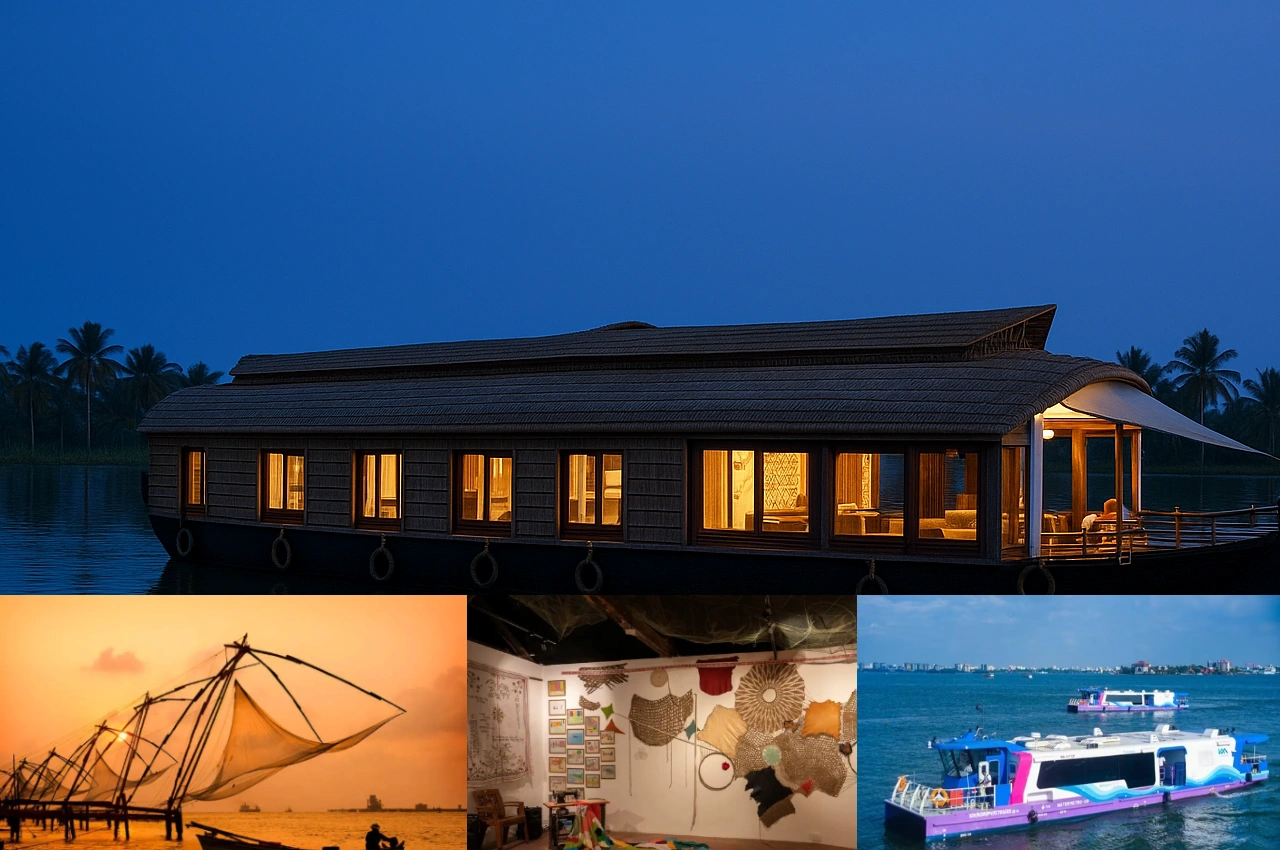
Visiting the Kochi-Muziris Biennale is a transformative experience. As India’s largest contemporary art festival, it turns the historic streets of Fort Kochi into a global stage for dialogue. In 2026, the 6th edition, titled “For The Time Being,” has already recorded over 1.6 lakh visitors in its first 20 days, proving that this “people’s biennale” is more than an exhibition—it is a cultural movement.
However, the Biennale is deeply rooted in the geography of Kochi. To understand the art, you must understand the salt, the spice, and the slow-moving waters of the coast. If you only stay inside the galleries, you are missing the heartbeat of the festival. Here is your cultural immersion map for the 2026 season.
What Is the Kochi-Muziris Biennale?
The Birth of India’s Largest Contemporary Art Festival
Founded in 2012 by artists Bose Krishnamachari and Riyas Komu, the Biennale was a radical idea. It wasn’t built in a new museum but reclaimed from the ruins of history. Inspired by the ancient, lost port of Muziris, it chose Kochi’s colonial-era spice warehouses as its home.
Why It’s Not Just an Exhibition — It’s a Cultural Movement
The 2026 edition, curated by Nikhil Chopra and HH Art Spaces, features 66 artists from over 25 countries. It focuses on embodied knowledge and durational performance. This isn’t art you just look at; it’s art that happens around you. It encourages slow travel, where the dialogue between the global artist and the local community creates a new kind of “intellectual tourism.”
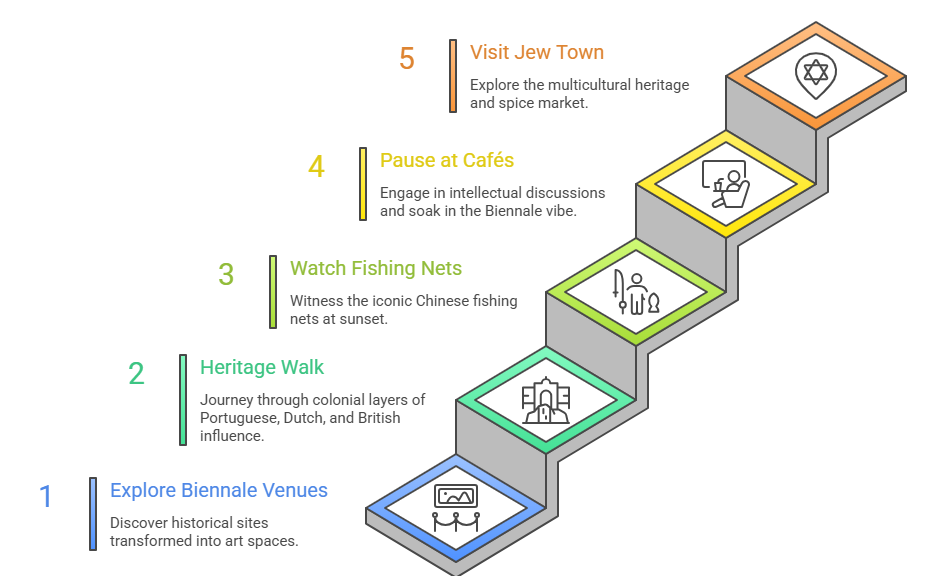
1. Explore Biennale Art Venues Across Fort Kochi
The venues are the primary characters of the Biennale. They are not empty boxes; they are historical sites that breathe.
What Makes These Venues Unique?
The main venue, Aspinwall House, is a sprawling 19th-century seafront complex. Other major spots like Pepper House and Anand Warehouse were once the epicenter of the global spice trade.
Why You Shouldn’t Rush It
In Kochi’s tropical climate, art interacts with humidity, rust, and the sea breeze. You might find a sculpture that slowly decays or a painting that changes color with the salt air. These site-specific installations respond to the architecture. Walking through these ruins, you realize that each venue tells a layered story of trade, colonialism, and time.
2. Take a Heritage Walk Through Fort Kochi’s Colonial Layers
Fort Kochi is an architectural palimpsest. You can see the handprints of the Portuguese, Dutch, and British on every corner.
Portuguese → Dutch → British → Contemporary India
- St. Francis Church: Built in 1503, this is one of India’s first European churches. It is famously where Vasco da Gama was once buried.
- Santa Cruz Basilica: A stunning Gothic structure that represents the early 16th-century Portuguese influence.
- David Hall: A 17th-century Dutch bungalow, now a Biennale venue and gallery, reflecting the transition of power in Kochi.
Why This Matters During the Biennale
The art in the Biennale often deals with themes of decolonization and memory. Walking past these monuments helps you see the “ghosts” that the artists are often trying to communicate with in their work.
3. Watch the Chinese Fishing Nets at Sunset
The Chinese Fishing Nets (Cheena Vala) are the iconic silhouette of Kochi. Introduced by traders in the 14th century, they remain a marvel of manual engineering.
14th-Century Engineering Meets Contemporary Art Energy
These nets are operated by a complex system of weights and pulleys. Watching a team of fishermen lift a net is a rhythmic, almost choreographed performance. It represents human labor and collective effort—concepts that are central to Nikhil Chopra’s 2026 curatorial vision.
4. Pause at Fort Kochi’s Art Cafés
Between the large-scale installations at Aspinwall and Pepper House, the city’s cafés serve as “informal intellectual hubs.”
Café Culture During Biennale Season
Places like Kashi Art Café and David Hall Café are where artists, critics, and travelers meet. You might find a panel discussion over wood-fired pizzas or an indie bookstore tucked behind a coffee machine. These aren’t just stops for food; they are where the ” Biennale vibe” is most concentrated.
5. Visit Jew Town and the Spice Market in Mattancherry
A short trip from Fort Kochi takes you to the narrow, fragrant lanes of Mattancherry.
The Jewish Heritage of Kochi
The Paradesi Synagogue (built in 1568) in Jew Town is a symbol of Kochi’s multicultural past. Its hand-painted Chinese tiles and Belgian chandeliers represent a world that was globalized long before the internet.
Why It Deepens the Biennale Experience
Many Biennale works explore trade, migration, and identity. Walking through the spice markets—where the air is thick with the scent of ginger and turmeric—provides a sensory context for the art.
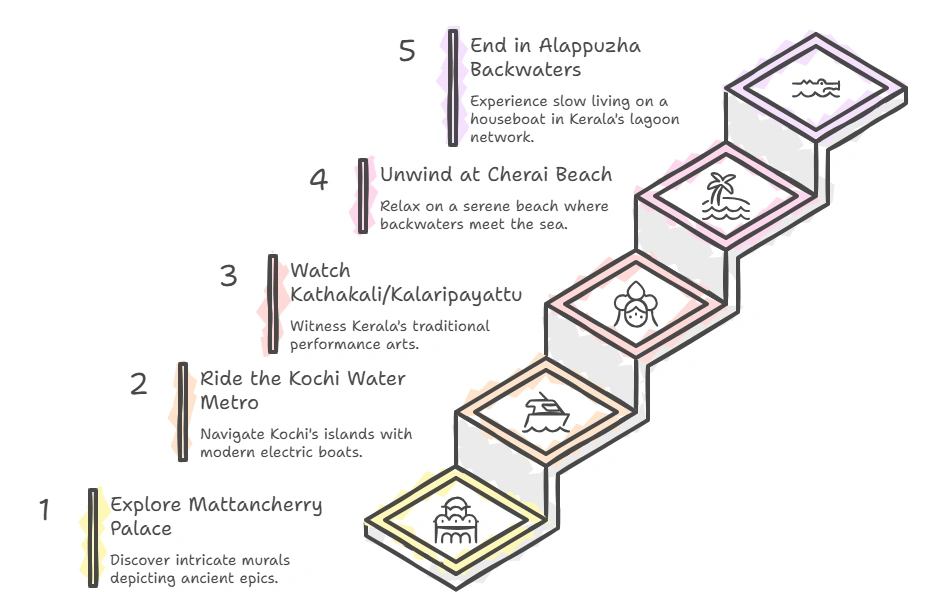
6. Explore Mattancherry Palace (The Dutch Palace)
Built by the Portuguese and gifted to the King of Kochi, this palace is famous for its “Kerala Murals.”
Built by the Portuguese, Renovated by the Dutch
The palace houses some of the most intricate murals in India, depicting scenes from the Ramayana and Mahabharata. These traditional works of art offer a profound contrast to the “conceptual abstractions” you will see in the Biennale venues.
7. Ride the Kochi Water Metro
In 2026, the Kochi Water Metro has become a primary mode of transit for tourists. It is the first of its kind in India and connects the islands of Kochi with electric-hybrid boats.
Seeing Kochi as a Network of Islands
Riding the Water Metro to Willingdon Island or Vypin is more than just transportation. It gives you a panoramic view of the harbor and the massive container terminals. It shows you the contemporary maritime identity of Kochi, which is often a subject of Biennale photography and film.
8. Watch a Kathakali or Kalaripayattu Performance
To understand the 2026 Biennale theme of “Embodied Knowledge,” you must see the traditional performance arts of Kerala.
Kerala’s Storytelling Traditions
- Kathakali: A highly stylized classical dance-drama known for its intense facial expressions and “body grammar.”
- Kalaripayattu: One of the oldest martial arts in the world. These performances are about the discipline of the body, a theme that many contemporary artists in this year’s Biennale are exploring through live performance art.
9. Unwind at Cherai Beach
After two or three days of looking at complex art, “Biennale fatigue” is real. You need a space to process everything.
The Geography of Calm
Cherai Beach on Vypeen Island is a cleaner, quieter alternative to the city beaches. It is where the backwaters meet the sea. The silence of the beach offers the perfect mental reset before you head to your final Kerala destination.
10. End Your Journey in the Alappuzha Backwaters
If Kochi is the mind of Kerala, Alappuzha is its spirit. No Biennale trip is complete without experiencing a Vembanad stay.
Add a Houseboat Experience in Kerala’s Lagoon Network
After the intellectual stimulation of the art festival, head 90 minutes south to Alleppey. Here, you can transition from “Contemporary Art” to “Slow Living.” An Alappuzha houseboat cruise is a lesson in rhythm. These former rice barges (Kettuvallams) now offer a luxury window into the Kuttanad water tours lifestyle. Gliding through the canals on a Kerala boat house allows you to see the same village life that inspired many of the artists in the Biennale.
Whether you opt for an Alappuzha boat house low price list for a day cruise or a luxury overnight stay, it is the ultimate way to decompress. The silence of the lagoons and the gentle pace of a backwater cruising trip provide the perfect end to your artistic pilgrimage.
How to Plan a 3-Day Biennale + Culture Itinerary
- Day 1: Explore Aspinwall House and Pepper House. Sunset at Chinese Fishing Nets.
- Day 2: Mattancherry Palace, Jew Town, and a Kochi Water Metro ride. Evening Kathakali performance.
- Day 3: Head to Alleppey for a houseboat in Alleppey cruise to unwind before your flight.
FAQs
When is the Kochi-Muziris Biennale 2026 held?
The 6th edition runs from December 12, 2025, to March 31, 2026.
How many days do you need to explore the Biennale?
At least two full days for the art venues and one additional day for the heritage sites.
Are Biennale venues walkable?
Most are in Fort Kochi and are walkable. For Mattancherry, a tuk-tuk or local ferry is recommended.
Can you combine the Biennale with an Alappuzha houseboat trip?
Yes. Alappuzha is only 53 km south of Kochi. Most travelers book through Lake Park Cruise for a seamless transition from the art festival to the backwaters.
Is the Kochi Water Metro useful for tourists?
Yes, it connects the High Court, Fort Kochi, Mattancherry, and Willingdon Island efficiently for under ₹40.