The emerald-green backwaters of Kerala are a dream for many. But for some, that dream comes with a silent shadow of fear. If you are one of the millions of people worldwide who cannot swim, the idea of staying on a boat in the middle of a massive lake like Vembanad can feel intimidating. You might ask yourself: “Is an Alleppey houseboat safe for me? What if I fall in? Do I need swimming skills to experience the Kuttanad water tours?”
In 2026, Kerala tourism reached a milestone, welcoming over 2.58 crore visitors. A significant portion of these travelers are non-swimmers, including senior citizens, families with small children, and international tourists who have never been on a boat before. The reality is that houseboat life in Kerala is designed for relaxation, not risk.
This comprehensive guide is written to remove that fear. We will explore why the backwater system is naturally safe, the rigorous Alleppey houseboat safety protocols in place, and why you don’t need to be an Olympic swimmer to enjoy the magic of “God’s Own Country.”
First-Time Fear: “Do I Need to Know Swimming to Stay on a Houseboat?”
The short answer is: No. You do not need to know how to swim to enjoy a houseboat stay.
Many first-time travelers mistakenly compare a houseboat in Alleppey to a boat in the open ocean or a fast-moving river. This comparison is inaccurate. The Kerala backwaters are a unique ecosystem of calm, inland waterways. Unlike the sea, there are no crashing waves or hidden riptides here.
Staying on an Alappuzha boat house is much closer to staying in a “floating cottage” than being on a standard naval vessel. The boat moves at a pace slower than a casual walking speed. The waters are largely sheltered from heavy winds. For most of the journey, you are never more than a few meters away from the shore.
What Exactly Is an Alleppey Houseboat?
To understand why it is safe, you must understand the boat itself. The traditional Kettuvallam is an engineering marvel.
From Rice Boats to Floating Homes – A Short History
Centuries ago, these boats were known as Kettuvallams (meaning “boat with knots”). They were used as cargo ships to transport tons of rice and spices through the Kerala inland waterways.
- The Build: They are crafted from “Anjili” (wild jackfruit wood) planks, joined together with coir ropes and coated with caustic black resin made from boiled cashew kernels.
- The Logic: Because they were built to carry up to 30 tons of rice, they have incredible buoyancy. They are wide-bottomed and sit deep in the water, making them remarkably stable.
In the 1990s, these cargo boats were converted into luxury houseboats. Today, a boat house Alleppey features reinforced hulls, modern engines, and heavy-duty stabilizing structures, ensuring that the boat remains steady even when guests move from one side to the other.
Why the Backwaters of Alappuzha Are Perfect for Houseboats
The Vembanad Lake backwaters are protected from the rough Arabian Sea by a narrow barrier of land. This means the water in the canals is usually only 3 to 10 feet deep in most areas—not much deeper than a standard swimming pool. Furthermore, the Alappuzha backwater cruise takes place in a controlled environment where the water current is almost non-existent for most of the year.
The Truth About Safety for Non-Swimmers on Houseboats
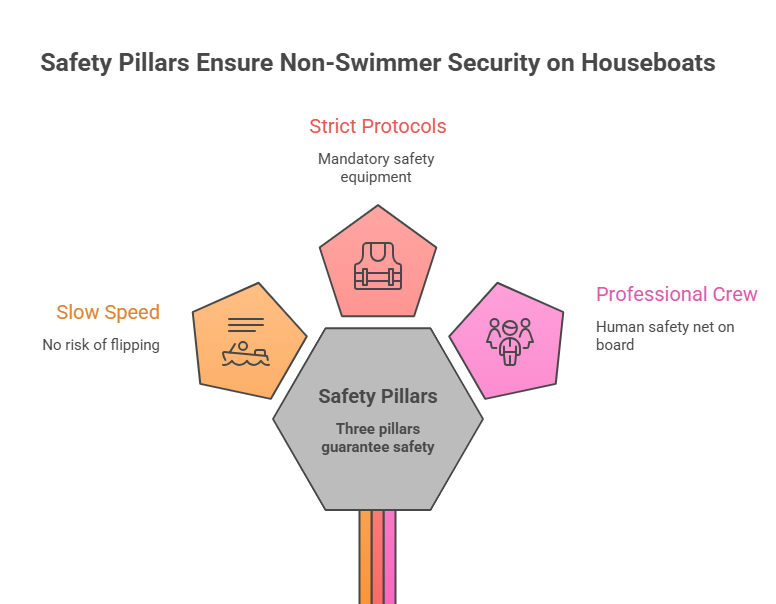
If you are a non-swimmer, your safety is guaranteed by three pillars: Physics, Equipment, and Personnel.
1. Houseboats Move Very Slowly
Speed is often the cause of water accidents. However, a houseboat in Alappuzha is built for “slow travel.”
- Average Speed: 5 to 8 km/h.
- The Impact: Because the boat moves so slowly, there is no risk of the boat “flipping” due to speed or sharp turns. You can comfortably walk around the deck while the boat is in motion.
2. Rigorous 2026 Safety Protocols & Equipment
Under the Inland Vessels (IV) Act 2021 and the 2026 Kerala Maritime Board regulations, every houseboat must meet strict safety criteria.
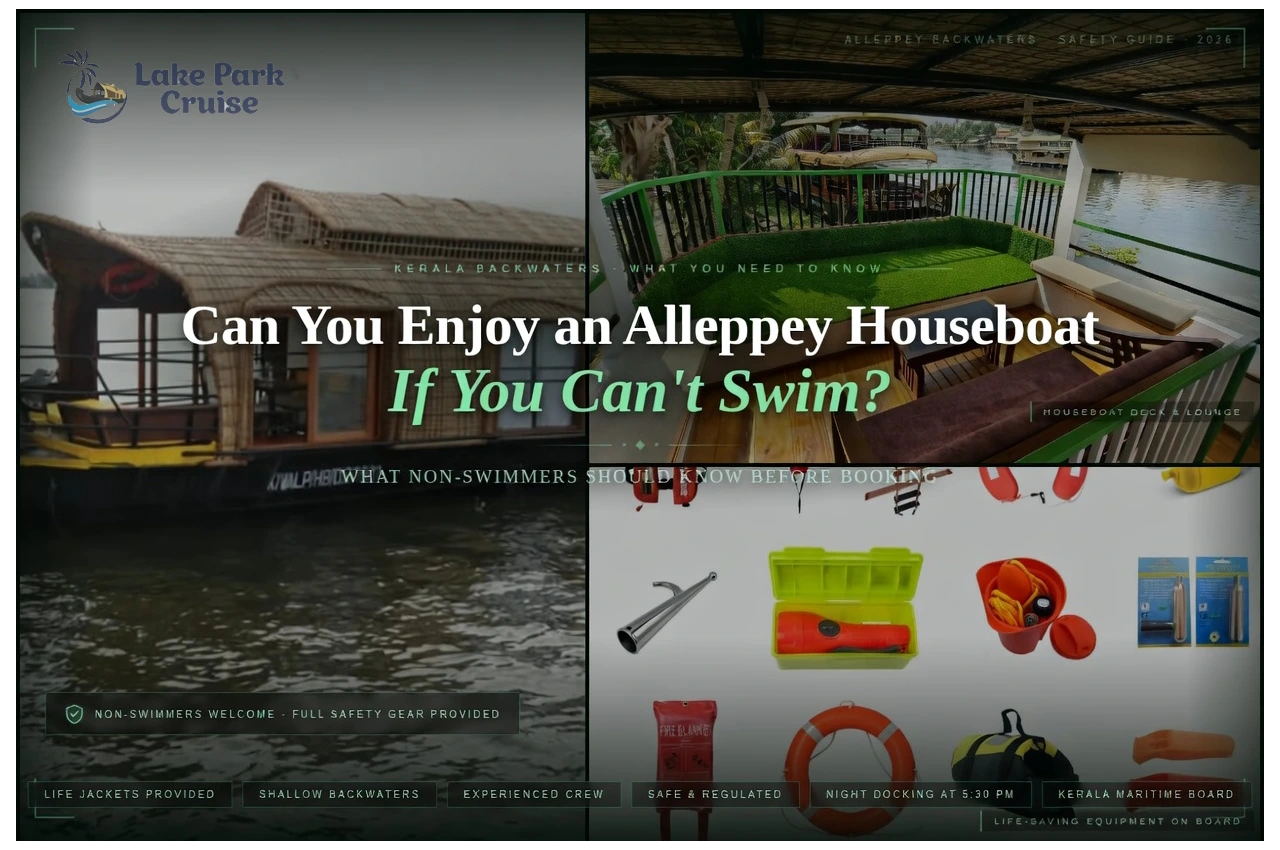
- Life Jackets: It is mandatory for every boat to carry one life jacket per passenger plus 10% extra for children. These are not tucked away in a locked box; they are kept in easily accessible racks in the living area and bedrooms.
- Lifebuoys: Every boat must have at least two lifebuoys (ring-shaped floats) on the deck for immediate use.
- Fire Safety: Since you are on a wooden boat with a kitchen, fire safety is prioritized. Boats are equipped with fire extinguishers, sand buckets, and smoke alarms in the engine room.
3. The Professional Crew: Your Human Safety Net
You are never alone on the water. A standard house boat Alappuzha cruise includes a dedicated crew of three:
- The Captain (Master): Usually holds a Master Class 3 certification. They have thousands of hours of experience navigating these specific canals.
- The Engine Driver: A certified professional responsible for the mechanical health of the boat.
- The Chef: While their main job is the food, they are also trained in basic emergency response.
In 2026, the Kerala government has mandated regular skill development programs for crew members, including first-aid training and water rescue drills.
Comparison: Houseboat Safety vs. Other Water Activities
| Feature | Alleppey Houseboat | Open Sea Ferry | Speed Boat Ride |
| Water Condition | Calm Inland Lagoon | Rough Waves | High Wake |
| Average Speed | 6 km/h | 30-40 km/h | 50+ km/h |
| Depth of Water | 3–12 Feet (Avg) | 100+ Feet | Variable |
| Crew to Guest Ratio | 3 Crew for 2–6 Guests | 5 Crew for 100+ Guests | 1 Driver for 4 Guests |
| Risk of Motion Sickness | Near Zero | Moderate | High |
Things Non-Swimmers Should Know Before Booking
To ensure absolute peace of mind, follow these safe backwater tourism tips during your booking process.
Choose Licensed Houseboat Operators
Never book with an “unregistered” boat at the jetty. A licensed boat will have its KIV (Kerala Inland Vessel) number painted clearly on the side. This number proves the boat has passed its annual fitness test, which includes a hull inspection and a safety equipment check. At Lake Park Cruise, we only operate verified and classified vessels (Silver, Gold, or Diamond).
Inform the Crew If You’re a Non-Swimmer
Don’t be shy about it. When you board, tell the captain: “I don’t know how to swim.” The crew will take extra care of you. They will show you exactly where your life jacket is located and explain the safety features of the boat. Knowing that the crew is aware of your situation will immediately lower your anxiety levels.
Basic Houseboat Etiquette
- Avoid Leaning Over Railings: While the railings are high and secure, don’t climb on them for photos.
- Non-Slip Footwear: The wooden deck can become slippery if it rains. Wear sandals with a good grip.
- Supervise Children: If you are traveling with kids, they should wear life jackets whenever they are on the open deck, regardless of whether they can swim.
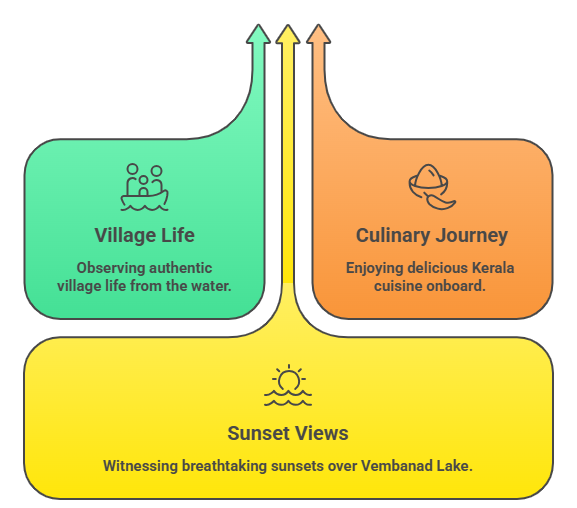
Why Even Non-Swimmers Love the Alleppey Houseboat Experience
Safety is just the foundation. The real reason people visit is the Alappuzha houseboat experience. For a non-swimmer, this is the safest way to “be on the water” without actually being in the water.
1. Watching Village Life Along the Canals
As you glide through the Kuttanad lagoon network, you will see a world that is inaccessible by road. You will see children paddling to school in tiny canoes, women washing clothes on the banks, and local farmers tending to paddy fields that are situated below sea level.
2. The Traditional Culinary Journey
Your onboard chef will prepare authentic Kerala delicacies. From the spicy Karimeen Pollichathu (Pearl Spot fish) to the comforting vegetable thoran, the food is often the highlight of the trip. Since you are in a controlled environment, you can enjoy your meal without the “crowd stress” of a restaurant.
3. The Sunset Over Vembanad Lake
As the sun dips below the horizon, the water turns into a sheet of liquid gold. Because the boat is stable, you can enjoy this view with a cup of tea from the upper deck, feeling completely secure.
Who Should Try a Houseboat Stay?
The houseboat in Alappuzha is one of the most inclusive travel experiences in India. It is ideal for:
- Senior Travelers: Who want a low-impact, high-comfort sightseeing tour.
- Honeymoon Couples: Looking for ultimate privacy in a romantic setting.
- Families: Who want to disconnect from gadgets and reconnect with each other.
- Non-Swimmers: Who want to conquer their fear of water in the safest possible way.
Final Thoughts: Swimming Is Not Required to Enjoy Kerala’s Backwaters
Swimming is a skill for the sea; patience is the skill for the backwaters. You don’t need to know how to tread water to appreciate the beauty of a Vembanad stays cruise. The boats are designed for stability, the routes are chosen for calmness, and the crew is trained for your protection.
An Alleppey houseboat trip is about slowing down. It is about watching the world go by at 6 kilometers per hour. It is a safe, luxurious, and soul-stirring way to experience “God’s Own Country.”
Ready to set sail without the stress? Explore our Alleppey Houseboat Packages and book a verified, safe, and professional backwater journey today.
FAQ
1. Is it safe to stay on a houseboat in Alleppey if I cannot swim?
Yes, it is completely safe. Houseboats move very slowly, stay in calm inland waters, and are equipped with all necessary safety gear. You are never required to enter the water.
2. Do Alleppey houseboats provide life jackets?
Yes. It is a legal requirement in Kerala for every houseboat to carry life jackets for every passenger on board. These are usually kept in the living room or bedrooms.
3. Are Kerala backwaters deep or dangerous?
The backwaters are generally shallow, ranging from 3 to 12 feet in most tourist routes. There are no waves or strong currents, making it a very stable environment.
4. Can children and elderly people stay on houseboats safely?
Absolutely. Houseboats are a favorite for multi-generational families. The slow pace and high stability make it easy for seniors and children to move around safely.
5. What safety measures do houseboats in Alappuzha follow?
They follow the KIV (Kerala Inland Vessel) safety norms, which include annual fitness certificates, mandatory lifebuoys, fire extinguishers, and a certified crew of three.
6. Is it necessary to swim during a houseboat trip?
No. There is no activity during a standard houseboat cruise that requires you to enter the water. You remain on the boat for the duration of the cruise and the night stay.