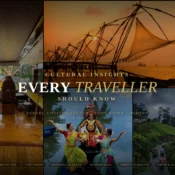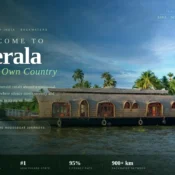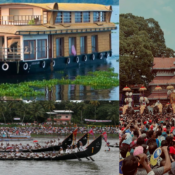
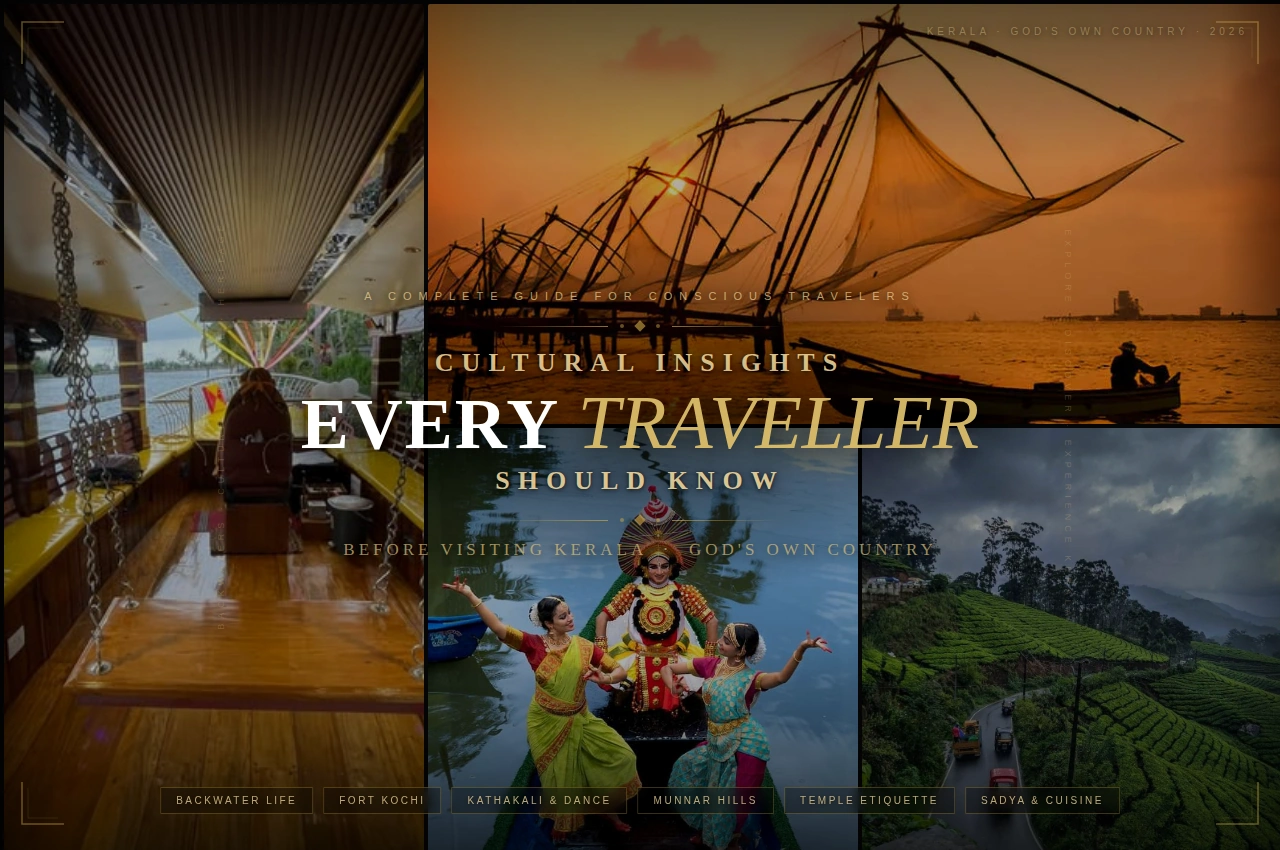
Kerala is not just a destination; it is a state of mind. Often called “God’s Own Country,” it is a land where high-tech digital literacy meets 2,000-year-old ritualistic traditions. For a traveler, crossing the border into Kerala feels like entering a different country altogether. The air is humid, the landscape is a deep, emerald green, and the social fabric is tightly woven with pride and intellect.
In 2026, Kerala tourism is no longer about just “seeing” places—it is about “understanding” them. As we hit a projected literacy rate of 96.2% this year, you’ll find that every person you meet, from your Alleppey houseboat captain to a village shopkeeper, has a strong opinion on world politics and a deep love for their land. This guide is your cultural compass. It will help you navigate the nuances of the Kerala backwater lifestyle, understand the devotion behind the art, and blend in like a local during your Alappuzha lagoon voyages.
Kerala Is Not Just a Destination — It’s a Socially Conscious Society
The first thing you will notice in Kerala isn’t the coconut trees—it’s the people’s gaze. It is direct, curious, and educated. Kerala is one of India’s most socially progressive states, and this didn’t happen by accident.
The Legacy of Reform Movements
In the late 19th and early 20th centuries, Kerala underwent a massive social revolution. Reformers like Sree Narayana Guru challenged the rigid caste system with a simple, powerful slogan: “One Caste, One Religion, One God for All.” This movement prioritized education over everything else. Today, the results are clear. Kerala has the highest Human Development Index (HDI) in India. When you visit a boat house Alleppey, the crew likely reads the daily newspaper cover-to-cover before the first guest arrives.
Why Politics Is a Daily Conversation
In Kerala, politics is a sport. You will see red flags of the Communist Party of India (Marxist) flying next to the green of the Muslim League and the saffron of the BJP. This is not a sign of chaos; it is a sign of intense democratic participation.
- Insiders’ Tip: Don’t be surprised if your taxi driver starts a debate about international trade or local labor rights.
- The Etiquette: It is perfectly fine to listen, but as a traveler, it is wise to remain neutral. Keralites are passionate, and these discussions are a core part of their social identity.
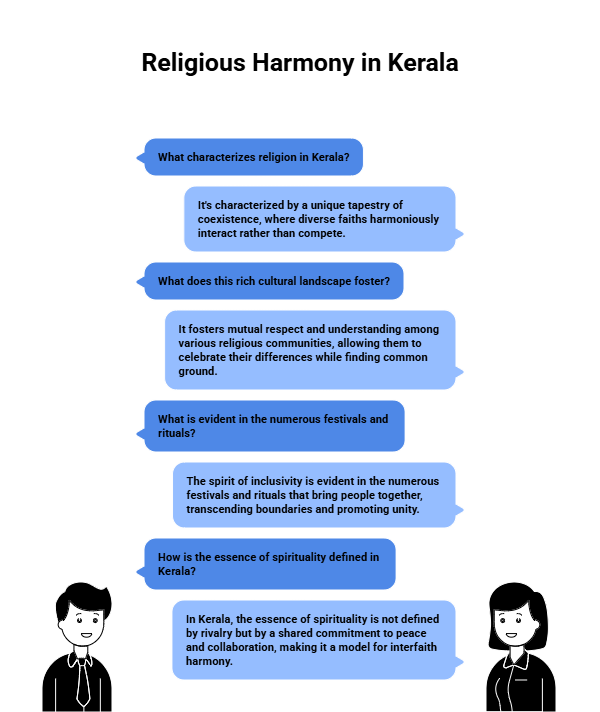
Religion in Kerala Is Coexistence, Not Competition
Kerala is a global example of religious harmony. Here, the first mosque in India (Cheraman Juma Masjid) and some of the oldest Christian communities in the world (dating back to St. Thomas the Apostle in 52 AD) exist peacefully alongside ancient Hindu temples.
Temples, Churches & Mosques Within Walking Distance
You will often see a temple, a mosque, and a church sharing the same street. This coexistence is visible in the festivals too. Christians often participate in temple Utsavams, and Hindus visit the famous shrines like Sabarimala with a sense of universal spirituality.
Temple Etiquette: Respect Over Restriction
Hindu temples in Kerala follow very strict traditional rules. Unlike temples in North India, these are treated as the actual “home” of the deity.
- The Dress Code: Many temples require men to wear a Mundu (sarong) and remain bare-chested. Women are expected to wear Saris or long skirts.
- Entry Rules: Some ancient temples still restrict entry to “Hindus only.” This is not meant to be exclusionary; it is part of an ancient ritualistic tradition. Always check the signboards at the entrance.
- Photography: Never take photos inside the inner sanctum. It is considered a major violation of the deity’s privacy.
The Backwater Lifestyle Is Built on Patience
When you board an Alappuzha houseboat, you are entering a world where time is measured by the tide, not the clock. The Kerala backwater lifestyle is inherently slow.
Time Moves Differently in Alappuzha
Life along Vembanad Lake revolves around the water. Children take canoes to school, and postmen deliver mail in small boats.
- Silence is Golden: Loud music, heavy honking, and aggressive rushing are considered deeply disruptive here. The backwaters are a sanctuary.
- The Evolution: Originally, these were Kettuvallams (rice barges) used to transport heavy loads of spices. The transition to the modern houseboat in Alleppey tourism economy has kept the traditional silhouette but added luxury. However, the soul of the journey remains the quiet glide.
Photographing Life in Kerala: A Gentle Reminder
Kerala is incredibly photogenic. You will see toddy tappers climbing 50-foot coconut trees with a knife between their teeth. You’ll see the Chinese fishing nets in Kochi casting a golden shadow at sunset.
Important Note: Kerala’s hospitality is warm—but warmth is not an invitation to treat people as exhibits. Always ask before taking a close-up portrait of a local. A simple nod and a smile go a long way.
Food in Kerala Is Identity, Not Just Cuisine
In Kerala, food is a ritual. If you are served a meal on a houseboat in Alappuzha, it will likely be on a fresh green banana leaf.
Why the Banana Leaf?
It is not just for the “aesthetic.” The banana leaf is naturally sustainable, hygienic, and adds a subtle, earthy flavor to the hot rice. It is the ultimate eco-friendly plate.
- The Etiquette: Always wash your hands before eating. In Kerala, eating with your right hand is the norm. It allows you to feel the texture of the food, which is considered the first step of digestion.
The Psychology of the Sadya
The Sadya is the grand feast served during festivals like Onam. It is a marvel of food hierarchy and nutrition.
- Centrality of Rice: Rice is the heart of the meal.
- The Order: Savory dishes are served first, moving from the left of the leaf to the right. Sweet Payasam is served at the end to signify a “sweet conclusion” to the meeting.
- The Fold: After finishing, fold the leaf toward you to show satisfaction.
Gender Dynamics: A History of Empowerment
Travelers are often surprised by the visibility of women in Kerala’s workforce and public spaces. This stems from a unique history.
Matrilineal Heritage
Historically, many communities in Kerala, like the Nairs, followed a matrilineal system (Marumakkathayam). Property and family names were passed down through the female line. While this system has changed, the legacy remains. Women in Kerala have high levels of education and financial agency.
Solo Female Travel
Is Kerala safe for solo female travelers? Culturally, yes. Compared to many other parts of the world, women travel freely here. However, Kerala remains socially conservative in its attire. Wearing modest clothing that covers shoulders and knees will help you navigate the rural Alappuzha backwaters without unwanted attention.
Art Is Not Performance — It’s Devotion
If you watch a Kathakali performance during your stay, remember that you are watching a prayer, not just a show.
Kathakali and Theyyam
- Kathakali: Performers spend hours applying natural mineral makeup. Every eye movement and finger gesture (Mudra) tells a specific word from the Indian epics.
- Theyyam: In Northern Kerala, Theyyam is a ritual where the performer is believed to become the god. People approach the performer for blessings and advice. It is a raw, powerful, and sacred tradition. Treat these events with the same silence and respect you would give to a church service.
Everyday Behaviors to Help You “Blend In”
To experience the true Kerala travel cultural tips, you must act like a local.
| Situation | Cultural Insight | Lake Park Tip |
| Footwear | Shoes are never worn inside homes or temples. | Leave your shoes at the entrance of your boat house Alleppey. |
| Public Affection | Rural Kerala is conservative. Hugging or kissing in public is frowned upon. | Keep romantic gestures private on your houseboat deck. |
| Alcohol | Alcohol is not widely accepted in public spaces. | Most houseboats are “bring your own” for private consumption. |
| Negotiation | Aggressive haggling is considered rude. | Negotiate politely in Alappuzha shops; a smile gets a better price. |
| Morning Hours | The backwaters wake up early (5:30 AM). | Enjoy the silence of the dawn; avoid loud noise until 8 AM. |
Responsible Tourism: The Lake Park Way
Kerala is a pioneer in Responsible Tourism. In 2026, the government implemented strict plastic bans across the Vembanad stays.
- Waste Management: When on an Alappuzha houseboat, never throw anything into the water. The backwaters are a source of drinking water for thousands of villagers.
- Supporting Local: Buy coir products, spices, and honey from small village cooperatives. It ensures the tourism money stays in the community.
Conclusion: A Journey of Mutual Respect
Kerala offers a rare chance to see a society that works. It is a place of high intellect, deep faith, and breathtaking nature. By understanding these cultural etiquette in Kerala tips, you move from being a “tourist” to a “guest.”
Whether you are checking the alappuzha boat house low price list for a budget trip or booking a luxury houseboat in Alleppey, remember that the best souvenir you can take home is not a spice box—it’s the memory of a conversation with a local who treated you like a friend.
Are you ready to set sail? Lake Park Cruise is here to help you navigate not just the waters, but the wonderful culture of Kerala.
FAQs
Is Kerala culturally conservative for tourists?
In terms of dress and public behavior (especially in rural areas and temples), yes. However, in terms of social ideas, education, and gender equality, Kerala is one of the most progressive states in Asia.
What should tourists avoid doing in Kerala?
Avoid public intoxication, wearing revealing clothes in temples or villages, and taking photos of people (especially women and children) without asking first. Also, never call a Keralite a “Madrasi”—it is geographically and culturally incorrect.
Can foreigners enter temples in Kerala?
Some temples allow everyone, while others (like the Padmanabhaswamy Temple) have strict “Hindus only” rules. Always check before entering and follow the specific dress code.
Is Kerala safe for solo female travelers?
Yes, it is widely considered one of the safest states in India due to high literacy and the visible presence of women in the workforce. Standard travel precautions apply.
Why are there so many political flags in Kerala?
This is a sign of a healthy, active democracy. Kerala has a highly politically aware population, and flags signify their participation in the governance of their state.