When you step onto a houseboat in Alleppey, you are not just boarding a vessel; you are stepping into a chapter of history.
Today, these boats are icons of relaxation—floating luxury hotels where tourists sip coconut water and watch the sunset. But for centuries, their purpose was far grittier. They were the heavy-duty trucks of their time, carrying the lifeblood of Kerala’s economy through its watery veins.
From transporting tons of rice and spices to hosting honeymooners from around the globe, the history of traditional houseboat (or Kettuvallam) is a fascinating tale of survival and reinvention.
At Lake Park Cruise, we are proud to keep this legacy alive. Join us as we drift back in time to explore the incredible evolution of the Kerala backwater history.
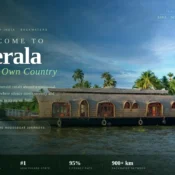
Introduction – The Backwaters of God’s Own Country
Before roads and railways crisscrossed the land, the backwaters were the only highways of Kerala. This vast network of 900 kilometers of canals, rivers, and lakes was the region’s lifeline.
If you were a spice trader in 1900, you didn’t use a truck. You used a boat. And not just any boat—you used the majestic Kettuvallam Kerala is famous for. These massive wooden barges were the undisputed kings of the water, designed to carry heavy loads across the shallow and deep waters of the Vembanad Lake.
Origins – The Rice Boats of Kerala
The word Kettuvallam tells you exactly what it is. In Malayalam, “Kettu” means “to tie” and “Vallam” means “boat”.
Built for Burden, Not Luxury
Originally, these boats were purely functional. They were the cargo carriers of the era, transporting rice, spices, and coconuts from the fertile fields of Kuttanad to the ancient port city of Kochi.
- Massive Capacity: A single Kettuvallam could carry up to 30 tons of cargo—that is the equivalent of three modern cargo trucks!.
- The Crew: The boatmen would live on these vessels for days. They slept on bamboo mats, cooked simple meals of fish and rice on board, and poled the boat manually through the canals.
This was a hard life, but it birthed a unique culture of boat-building and water navigation that defines Kerala to this day.
Transformation into Houseboats
So, how did a rugged cargo barge become a luxury hotel?
The Threat of Extinction
In the mid-20th century, modern roads and bridges began to connect the remote villages of Kerala. Trucks became faster and cheaper than boats. The mighty Kettuvallams were suddenly obsolete. They were abandoned, rotting on the riverbanks, and the art of making them was at risk of dying out forever.
The Birth of Tourism in the Backwaters
In the 1990s, visionary tourism pioneers realized that these abandoned giants had potential. They saw that tourists were fascinated by the slow, rhythmic pace of the backwaters.
They took the original cargo hull and added a room. Then a toilet. Then a kitchen.
- The Reinvention: The curved thatched roof, which originally covered piles of rice bags to protect them from rain, was redesigned to cover bedrooms and living spaces.
- A New Era: The “Rice Boat” was reborn as the “Houseboat.” What was once a vessel of labor became a vessel of leisure. This innovation saved the industry and gave the world one of its most unique travel experiences.
The Modern-Day Kettuvallam
Today’s Lake Park Cruise fleet may offer air-conditioning and premium dining, but the soul of the boat remains ancient.
Structure and Craftsmanship: A Marvel Without Nails
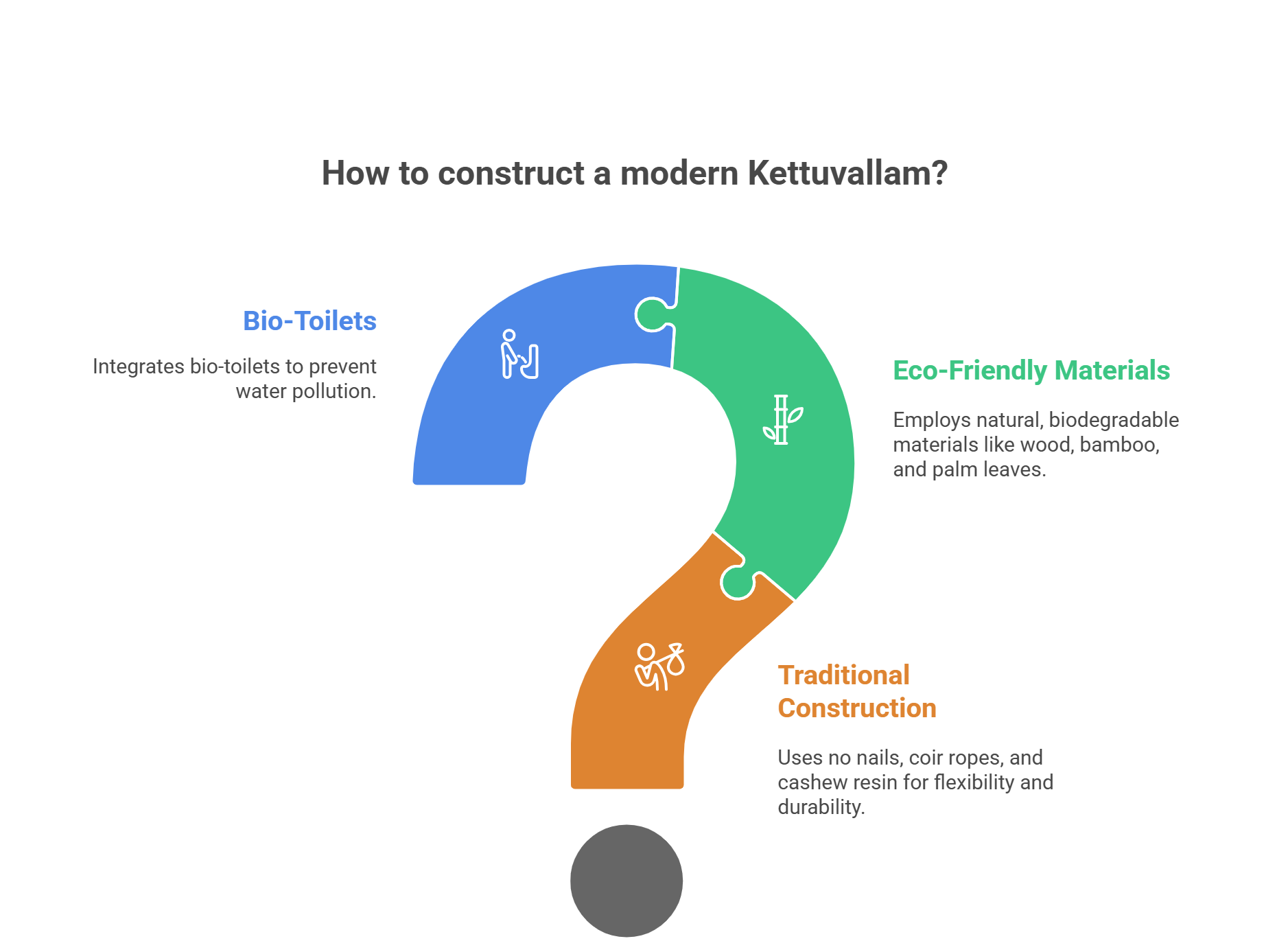
The most incredible fact about these boats is their construction. Even today, authentic Kettuvallams are built without using a single metal nail.
- The Stitching: Skilled master carpenters drill thousands of holes into planks of Anjili (Wild Jackfruit) wood. They then stitch the planks together using strong coir ropes made from coconut fiber.
- The Black Resin: The seams are sealed with a boiled resin made from cashew nut shells. This black coating acts as a waterproof sealant and gives the boat its distinct dark color.
This traditional method allows the boat to be flexible and durable, absorbing the shock of the waves rather than resisting it.
Influence of Sustainability and Eco-Tourism
Modern evolution isn’t just about luxury; it’s about responsibility. The history of traditional houseboat evolution has entered a green phase.
- Eco-Friendly Materials: The primary materials—wood, bamboo, coir, and palm leaves—are 100% natural and biodegradable.
- Bio-Toilets: To protect the delicate backwater ecosystem, modern houseboats like ours are equipped with scientific bio-toilets that prevent water pollution.
The Role of Lake Park Cruise in Preserving Tradition
At Lake Park Cruise, we see ourselves as guardians of this heritage. We don’t just run a business; we keep a tradition alive.
Blending Heritage with Modern Comfort
We believe that you shouldn’t have to choose between history and comfort. Our boats are hybrids of the past and present.
- The Exterior: We strictly maintain the traditional Kettuvallam design. From the outside, our boats look exactly like the ones that sailed these waters 100 years ago, preserving the aesthetic of the backwaters.
- The Interior: Step inside, and you find the comforts of the 21st century. We have integrated air-conditioning, modern glass windows for panoramic views, and luxury bathrooms—all without altering the boat’s traditional structure.
By hiring local artisans for maintenance and employing local crews, we ensure that the skills passed down through generations continue to thrive.
Conclusion – A Living Symbol of Kerala’s Culture
The Kerala backwater history is not written in books; it is floating on the water.
Every Alleppey boat house is a survivor. It is a bridge between the ancient spice trade and the modern traveler. When you sleep on a houseboat, you are cradled by a vessel that has evolved over centuries but has never lost its soul.
Don’t just watch the history float by. Be a part of it.
Ready to sail through time? Contact Lake Park Cruise to book your stay on a piece of living history.
FAQs
How old are Kerala’s traditional houseboats?
The design of the Kettuvallam dates back centuries, with some sources tracing the trade routes back to 3000 BC. However, their modern avatar as luxury houseboats for tourists began recently, in the early 1990s.
Who originally built kettuvallams?
They were built by master carpenters (known as Asaris) from specific local communities who passed the secret knowledge of the “no-nail” construction down through generations.
How did they evolve into luxury houseboats?
As road transport replaced water transport for cargo, the boats faced extinction. In the 1990s, tourism entrepreneurs modified the hulls to include bedrooms and toilets, transforming them from “Rice Boats” into “Houseboats” to attract travelers.
Are these boats still handmade today?
Yes. Authentic traditional houseboats are still handmade using the original method of stitching wood planks with coir ropes and sealing them with cashew resin. It is a labor-intensive art form that we are proud to preserve.