
Is Kerala safe for travelers? If you are planning your first journey to South India in 2026, this is likely your most pressing question. Safety is the foundation of any great vacation. You want to explore the Alappuzha backwaters or wander through spice plantations without a worry in the world.
The good news? Kerala is not just a scenic paradise; it is one of the most stable and secure regions in Asia. In 2025, Kerala recorded its highest-ever tourist footfall of 2.58 crore visitors, a testament to the global trust in its safety protocols. At Lake Park Cruise, we believe that informed travelers are safe travelers. This guide provides a detailed, data-backed look at safety in “God’s Own Country” to help you plan with total confidence.
What Is Kerala? (A Quick Introduction for First-Time Visitors)
Geography and Cultural Identity
Located on the southwestern tip of India, Kerala is a narrow strip of land sandwiched between the Arabian Sea and the Western Ghats. It is a land of diverse ecosystems. You can wake up in a misty hill station like Munnar and sleep on an Alappuzha houseboat the same night.
The “God’s Own Country” Spirit
Kerala’s identity is built on a unique blend of religious harmony, high social development, and a deep respect for nature. It is a place where Ayurveda, ancient festivals, and modern technology live side-by-side. For visitors, this translates into a welcoming atmosphere that feels more like a community than a commercial tourist trap.
A Short History of Tourism in Kerala – How Safety Became Part of Its Identity
Kerala didn’t accidentally become safe. It was designed that way through decades of community-centric policies.
From Spice Route to Global Tourism Map
Kerala’s history is one of welcoming foreigners. From the ancient trade links of Muziris to the arrival of the Portuguese led by Vasco da Gama in 1498, the state has been a global melting pot for centuries. This long history of trade created a culture that is naturally hospitable and accustomed to international guests.
Birth of Modern Kerala Tourism
In the 1980s, Kerala became the first state in India to be declared a “Tourism Industry.” Instead of building massive, isolated resorts, the state focused on:
- The Responsible Tourism (RT) Mission: Ensuring that local villagers benefit from your visit.
- Homestay Culture: Encouraging travelers to stay with local families, which naturally increased safety through community oversight.
Why Kerala Is Often Ranked Among the Safest States in India
The statistics in 2026 tell a clear story of security. According to the National Crime Records Bureau (NCRB), Kerala has seen a 20% decline in cognizable crimes since 2016.
Literacy and Social Awareness
Kerala maintains a literacy rate of approximately 95%. An educated population means a higher civic sense and better communication. Almost everyone you meet—from your boat house Alleppey captain to a local shopkeeper—will speak or understand basic English, making it easy to ask for help if needed.
Healthcare Infrastructure: A Global Benchmark
Safety isn’t just about crime; it’s about health. Kerala’s healthcare system is ranked #1 in India by NITI Aayog.
- 2026 Update: The Union Budget 2026 introduced five Regional Medical Hubs in the state to integrate advanced healthcare with tourism.
- Medical Tourism: Thousands of international travelers visit Kerala specifically for its world-class hospitals and Ayurveda centers.
Police & Tourism Department Integration
The Kerala Tourist Police is a dedicated wing trained to assist travelers. You will find them at major hubs like Fort Kochi and the Alappuzha finishing point. They are easily identifiable and provide 24/7 assistance.
Safety Breakdown by Category (Realistic Assessment)
1. Personal Safety & Street Crime
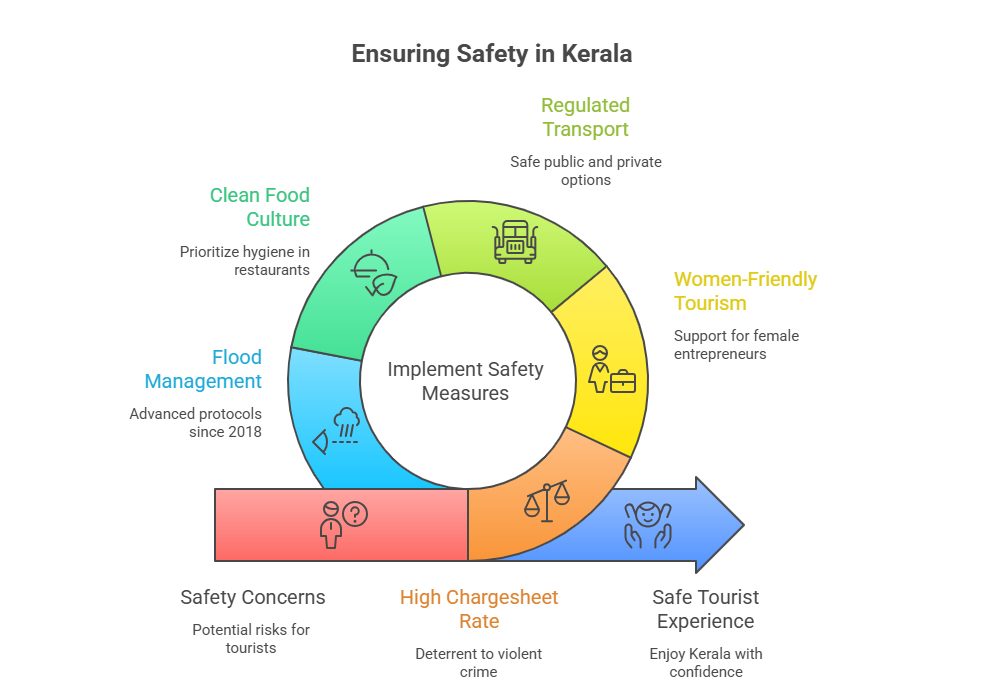
Violent crime against tourists is extremely rare in Kerala. The state has a chargesheet filing rate of 95.1%, which is significantly higher than the national average, acting as a strong deterrent to crime. While petty theft can occur in crowded markets, it is much less common than in major European or North American tourist cities.
2. Safety for Solo Female Travelers
Kerala is a leader in “Women-Friendly Tourism.” In 2026, over 17,600 women entrepreneurs have registered under the Responsible Tourism Mission.
- The Vibe: Local culture is conservative but respectful.
- Tip: Solo women often find staying in a Kerala boat house or a registered homestay safer because of the dedicated, professional crew and family-run atmosphere.
3. Transport Safety
- Public Transport: The Kochi Water Metro and local ferries are highly regulated and safe.
- Taxis: Use pre-paid taxi counters at airports or apps like Uber.
- Backwater Voyages: Always ensure your Alappuzha houseboat is licensed by the Kerala Maritime Board.
4. Health & Hygiene
Kerala has a “Clean Food” culture. You will find that most restaurants prioritize hygiene.
- Water: Stick to bottled or UV-filtered water provided on your houseboat.
- Food: Kerala’s hot, freshly cooked meals (like the Sadya served on a house boat Alappuzha) are generally safer than raw salads for first-timers.
5. Natural Disaster & Climate Risks
The monsoon (June–August) is beautiful but requires caution. Kerala has developed advanced flood management protocols since 2018. During heavy rains, authorities may temporarily pause backwater cruising for safety—a rule that professional operators like Lake Park Cruise strictly follow.
Why Backwater Tourism in Alappuzha Is Considered One of the Safest Travel Experiences
For first-time international visitors, a houseboat in Alappuzha is the most controlled and secure environment to experience Kerala. It offers a “private bubble” of safety.
Safety Measures on a Professional Houseboat
When you book with a verified operator like Lake Park Cruise, your safety is built into the vessel:
- Government Registration: Every boat has a unique KIV number.
- Life-Saving Gear: Sufficient life jackets for adults and children are mandatory.
- Night Docking: By regulation, all boats must anchor by 5:30 PM. This prevents night-time navigation risks and allows local fishermen to work.
- Professional Crew: Our captains and chefs are local experts who have spent their lives on these waters.
Why Families Feel Comfortable
On an Alappuzha houseboat, you are away from the urban chaos. There is no traffic, no large crowds, and no street-side stress. It is a curated itinerary where your needs are handled by a dedicated staff in a private environment.
Cultural Safety – Understanding Kerala’s Social Etiquette
Safety is a two-way street. Respecting local norms ensures a smoother journey.
- Dress Code: While beaches are relaxed, village areas are conservative. Covering shoulders and knees is appreciated.
- Alcohol Rules: Alcohol is only served in licensed bars and “Wine & Beer” parlors. Most alleppey houseboats do not serve alcohol unless you bring your own for private consumption (check with your operator).
- Temple Entry: Many temples have specific dress codes (Saris for women, Mundu for men) and some allow entry only to Hindus. Always check the signboards.
Common Myths About Safety in Kerala
- “The Monsoon is dangerous”: False. The “Monsoon Tourism” season is a favorite for Ayurveda. It only becomes risky if you ignore weather warnings in high-altitude hill stations.
- “Street food is unsafe”: Mostly false. Kerala’s street food is famous for its turnover and freshness. Just look for places with high local footfall.
Safety Checklist for First-Time Visitors to Kerala
- Book Registered Stays: Always verify the KIV license of your Alappuzha houseboat.
- Avoid Unlicensed Brokers: Never book with “touts” at the Alappuzha jetty. Use official websites.
- Travel Insurance: Always carry a policy that covers medical emergencies.
- Emergency Contacts: Keep the Kerala Tourism Helpline (1-800-425-4747) saved in your phone.
- Follow Weather Advisories: Especially during the months of June and July.
Conclusion: Plan Early, Travel Peacefully
Kerala is a destination where safety is woven into the social fabric. From the high literacy rates to the specialized Tourist Police, the state is designed to protect its guests. For the most secure and relaxing introduction to this land, a backwater cruising experience in Alappuzha is unparalleled. It offers the perfect mix of nature, culture, and high-standard safety.
Are you ready to experience “God’s Own Country” without the stress? Book your journey with Lake Park Cruise today and let the serenity of the backwaters be your guide.
FAQ
Is Kerala safe for first-time foreign tourists?
Yes. Kerala is widely considered the safest state in India for international travelers due to its high literacy, professional tourism industry, and low crime rates.
Is Alappuzha safe for couples and families?
Absolutely. The Alappuzha houseboat experience is a top choice for families and honeymooners because it offers a private, secure, and personalized environment.
Are houseboats in Kerala safe overnight?
Yes. Houseboats are required to dock at 5:30 PM at designated, safe locations. The crew stays on board in a separate cabin to provide 24/7 security.
Is Kerala safe during monsoon season?
Yes, but you should follow weather alerts. While Kuttanad water tours are beautiful in the rain, boat operations may be restricted during extreme weather for safety.
Is Kerala safe for solo female travelers?
Yes. Kerala is a pioneer in women-friendly tourism. Solo women are respected, and there are many women-run homestays and tours available.
What emergency services are available in Kerala?
You can dial 100 for Police or 112 for the pan-India emergency number. Kerala also has a dedicated Tourist Police force.